
Potatoes feel like humble heroes until they betray us in the fruit bowl. There’s a way to keep them firm and earthy for months, right at home, and the best place to do it isn’t where you think.
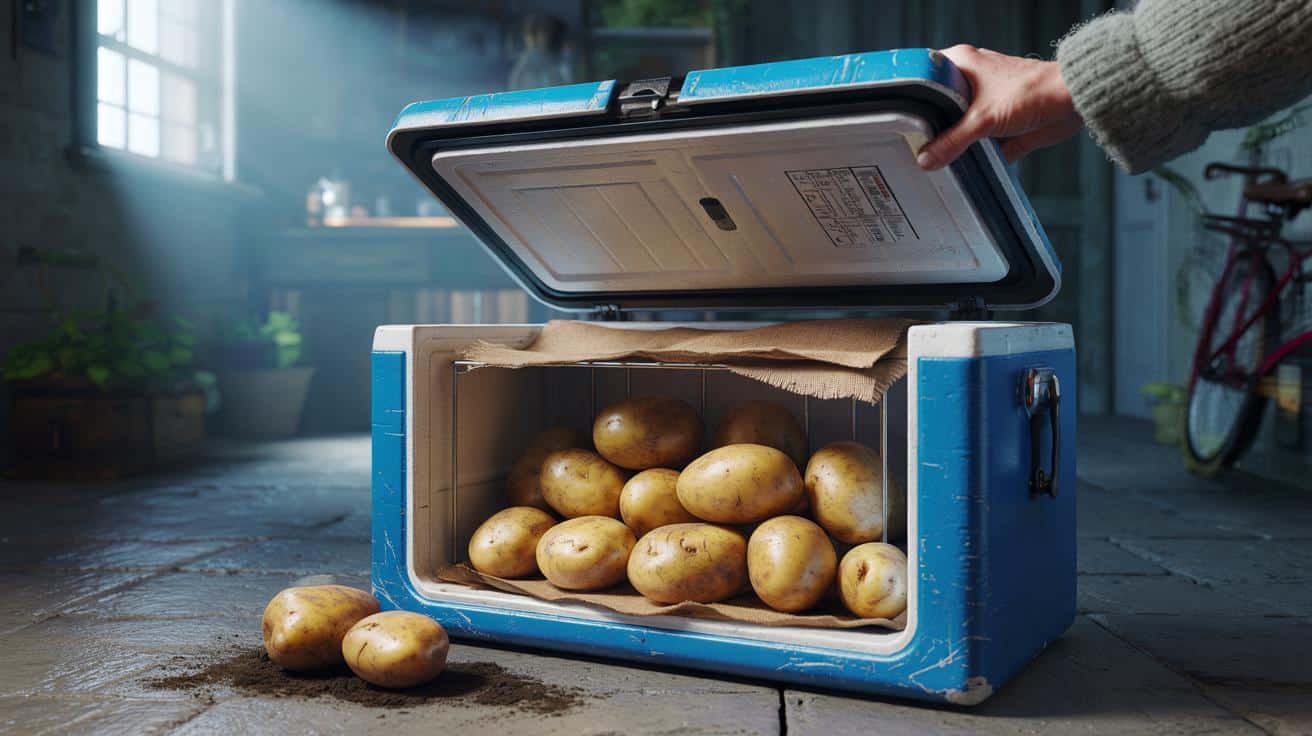
On a grey January afternoon in Leeds, I watched my neighbour flip open a scuffed blue cool box like a fisherman showing off a secret catch. Inside wasn’t ice or beer. It was a pile of Maris Pipers, velvety and unblemished, the sort you want to smash with butter and salt the moment you see them. *I could smell the earth before I saw the potatoes.* He grinned, said they’d been there since October, and dropped one into my hand like a magician ending a trick. The skin felt tight. Cold, but not fridge-cold. The hiding place? Not the pantry.
The six-month secret hiding in plain sight
That cool box was a DIY root cellar, parked on the garage floor away from the boiler, acting like a steady cave in a house that runs hot and cold. No fancy kit. Just darkness, gentle air flow and a temperature that sits closer to a crisp autumn morning than a kitchen. **Stored like this, potatoes can stay fresh for as long as six months.** The key is a calm microclimate: cool, stable and shaded. You’re not refrigerating. You’re hibernating.
He starts the ritual after the first real cold snap. A paper sack of maincrop spuds goes into the cool box in late October, and by March they still look ready for Sunday lunch. Out of a 10kg haul, he reckons he loses less than a kilo to the odd sprout or bruise. That’s not just thrifty. It bites into a bigger problem too: WRAP estimates British households bin millions of potatoes every week. One solid tweak to storage can save money and stop good food going to waste.
Why it works comes down to potato biology. Tubers want a quiet winter—low light, high humidity, a temperature around 4–8°C, and a breath of air to stop condensation. In that sweet spot, dormancy holds and sugars don’t surge, so texture and flavour stay balanced. **Darkness matters more than you think.** Light triggers greening and solanine, the bitter compound you don’t want on your plate. A cool box blocks light and buffers temperature swings, while a few tiny vents keep the air from going stale.
How to set it up today
Pick a solid cool box or camping cooler big enough for your usual spud haul. Make two or three matchstick-sized vents near the top edge, drop in a wire rack or a slatted trivet to lift the potatoes off the base, then line with thick paper or burlap. Slip in a cheap fridge thermometer and, if you’re keen, a small hygrometer. Aim for 4–8°C and a humidity that feels pleasantly clammy. Cure freshly dug potatoes for a week or two in a cool, dark spot so the skins toughen, then stack in a single layer and cover loosely with paper.
Common traps are sneaky. Don’t wash before storage; a bit of soil is a winter coat. Keep the cool box in an unheated garage, porch or under-stairs cupboard that sits cool but doesn’t freeze. Not next to the boiler. Not on a sunny shelf. And not in the fridge—cold sweetening makes them taste odd and can push acrylamide higher when you fry. We’ve all had that moment when you find a bag of spuds doing a science experiment under the sink. This stops that. **Let’s be honest: nobody rotates their potatoes every single day.** A monthly check is enough.
Think of it as creating a small, calm room for a vegetable that prefers winter. Two minutes of set-up, then it looks after itself.
“Treat potatoes like you would apples in an old farmhouse: cool, dark, and left alone,” says an allotment old-timer I met in Harrogate. “Do that, and they’ll pay you back in March.”
- Best spot: unheated, shaded space on a north-facing side.
- Keep away from onions and fruit that release ethylene.
- Ideal range: 4–8°C, high humidity, zero direct light.
- Check monthly; remove any bruised or sprouting tubers.
- Choose maincrop varieties for longest life: Maris Piper, King Edward, Desiree.
What this small hack says about how we live now
This is not a throwback hobby; it’s a tiny act of modern sanity. A cool box becomes a pocket of winter in a house that runs from radiator heat to oven steam to sunshine on a single day. It cuts waste, trims the food bill and buys you a kind of quiet confidence—like having candles in the drawer, or a spare phone charger. You’re not hoarding. You’re giving a hardworking staple the conditions it deserves, and in return you get mash in March that tastes like October soil and rain. Share the trick with a neighbour. Trade a bag for their spare leeks. See what happens.
| Key point | Detail | Interest for the reader |
|---|---|---|
| Cool box = root cellar | A simple camping cooler blocks light and buffers temperature swings | Longer-lasting potatoes without buying new equipment |
| Ideal conditions | 4–8°C, high humidity, gentle airflow, total darkness | Clear targets to hit for up to six months of freshness |
| What to avoid | Fridge cold, sunlight, onions/apples, washing before storage | Fewer sprouts, less waste, better flavour |
FAQ :
- Can I keep potatoes in the fridge?Not the best choice. Fridge-cold pushes sugars up, which can affect taste and raise acrylamide when frying or roasting.
- Which varieties store the longest?Maincrop types like Maris Piper, King Edward and Desiree hold well. New potatoes are for quick eating, not long storage.
- How do I spot unsafe potatoes?Green patches, a bitter taste, or soft, wet spots mean trouble. Cut off small green areas deeply or bin the potato if it’s heavily greened or mushy.
- Can I store potatoes with onions?Better to keep them apart. Onions and ethylene-producing fruit push sprouting and can speed up spoilage.
- Do sweet potatoes follow the same rules?They like it warmer—around 12–15°C—and never fridge-cold. Treat them separately from regular potatoes.




Brilliant hack! A cool box as a mini root cellar—never would’ve thought of that. Going to drill a couple vents and park it in my garage. Thanks for the detailed temps and humidity targets.
Six months? Sounds like magic tater lore. Anyone got real-world pics in March, not just October enthusiasm?