
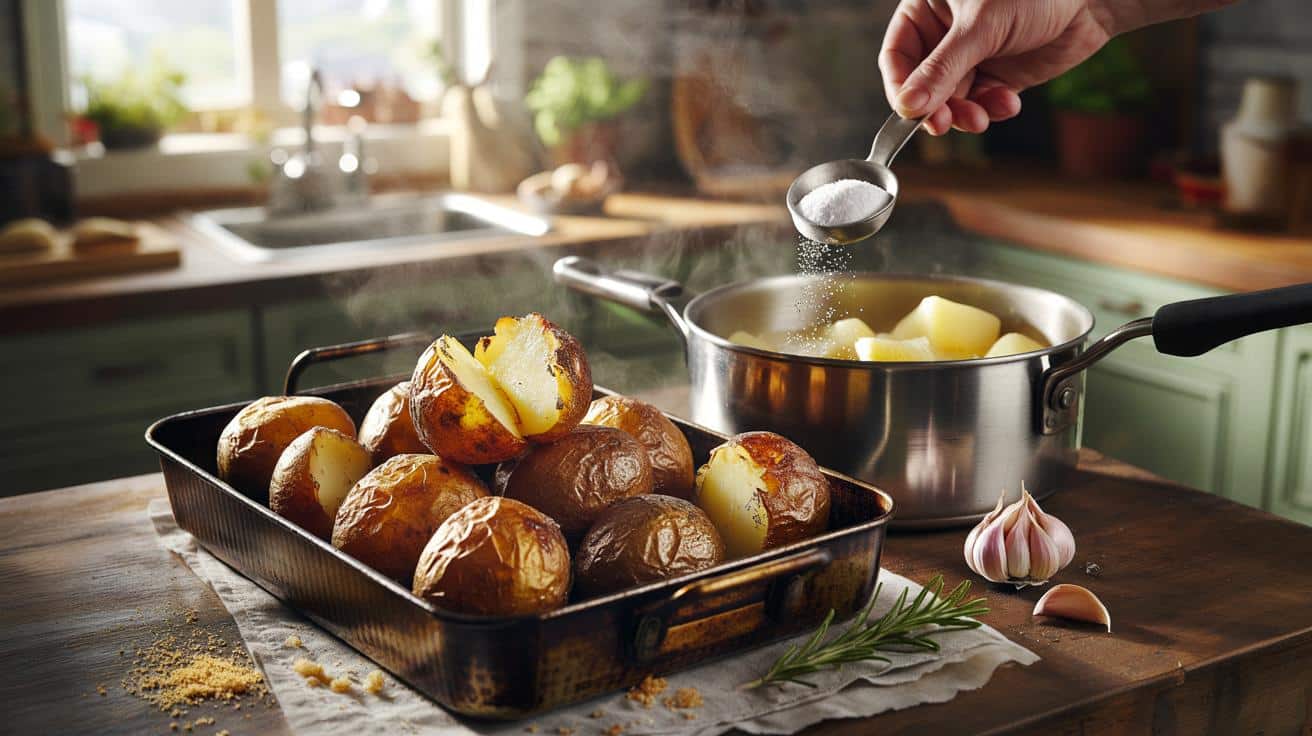
Good, not great. There’s a way to flip that script with less faff, more flavour, and a crackle that echoes down the table.
The first time I tried it, the kitchen smelled like a pub roast on a winter Sunday. The sash steamed, the tin hissed, and my neighbour Tom hovered in the doorway with a beer, pretending not to judge. I watched the edges of the potatoes fluff up like wool and felt a mild panic—had I overdone it? Thirty minutes later the room turned into a small chorus of crunches, then that low, happy silence people make when the food hits exactly right. A plate went around again, then a third time for the scraps. The trick didn’t feel flashy or chef-y. It felt like common sense in a hot oven. A little science sneaking into a family ritual. The secret looks suspiciously simple.
The small tweak that changes everything
Here’s the shift: simmer your potatoes with a pinch of bicarbonate of soda before they meet hot fat and a roaring oven. That tiny nudge lifts the surface starch into a starchy haze, roughs the edges, and sets you up for a shell that shatters like toffee. Inside, the centre stays cloud-light, the kind of fluff you get with Maris Piper or King Edward. Once you taste it, you’ll spot it every time—the clean, confident crunch that doesn’t fade as the tray cools. This is the easiest big win your roast will ever get.
We road-tested it on a weeknight when nobody had patience for ceremony. Two trays went in: the usual parboil on the left, the bicarb batch on the right. Same oil, same oven, same rush to the table. The difference wasn’t subtle. The “right-handers” vanished first, fingers tapping the tin for stragglers, conversation drifting into happy nonsense. Even the cold leftovers held their nerve, that rare party trick where a roastie tastes just as punchy standing up in the kitchen at 10pm. The method didn’t need a lecture. It sold itself in three bites.
Why it works is almost boring in its simplicity. Bicarbonate makes the boiling water slightly alkaline, which loosens the pectin in the potato’s surface and frees starch to form a paste. That paste dries in the oven into a crust full of nooks and crags, all prime real estate for browning. Alkaline surfaces also brown faster, so you get deeper colour without drying the centre into dust. You don’t need much—just enough to tip the balance, not enough to taste. The oven does the rest while you set the table.
So, how do you do it?
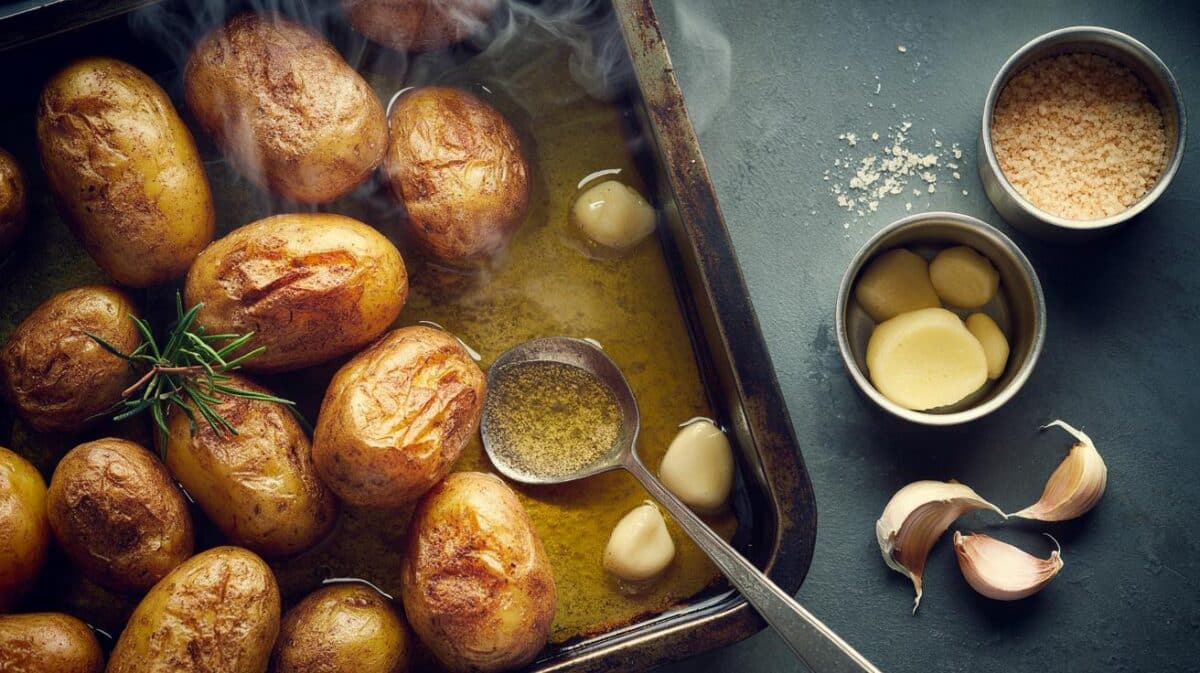
Pick a floury potato—Maris Piper, King Edward, or Rooster. Cut into chunky, even pieces. Bring a big pot of well-salted water to a lively simmer, add 1/2 teaspoon of bicarbonate of soda per litre, then slip in the potatoes. Cook until the edges start to fray and a knife meets the centre without persuasion. Drain, let the steam billow off for a minute, then rattle the pan to rough the surface. Slide into a preheated tin slicked with hot fat—dripping, goose fat, or a neutral oil—and roast at 220°C (200°C fan) until gloriously bronzed.
Watch the small things that make a big difference. Don’t crowd the tray; give each potato its patch of hot metal. Dryness is your friend, so let them steam off before the oil. Add garlic and herbs in the last 10 minutes so they don’t scorch, and salt with a little boldness. We’ve all had that moment where the roasties looked perfect, then slumped five minutes later on the plate. Space, heat, and patience save them from that fate. Salt your water generously; that’s where flavour starts.
There’s a rhythm to it once you’ve done it twice. Roasties become less of a gamble, more of a promise.
“It feels like cheating,” laughed my friend Rani in Leeds, “because it’s one tiny step that makes everyone think you’ve turned into your gran overnight.”
- Use floury potatoes for fluff, not waxy ones.
- Go for 1/2 tsp bicarb per litre of water—no more.
- Preheat the fat in the tin so the first touch sizzles.
- Add aromatics late for fragrance, not bitterness.
- Turn once, not constantly; let the crust build.
Let’s be honest: nobody really does that every day.
Why this works at the table
Roast potatoes set the mood. They tell your guests who you are in the kitchen—calm, chaotic, generous, picky. The bicarb trick takes the worry out of the tin and gives you back the room. You can talk, you can pour, you can listen to someone’s week without haunting the oven door with a spoon. *It feels almost like cheating.* The texture lands first, then the buttery interior, then the soft hum of rosemary on the finish. People lean in. They ask for the method, then swear they won’t forget it. Crunch makes memories, not just meals.
| Key point | Detail | Interest for the reader |
|---|---|---|
| Add bicarbonate to the simmer | 1/2 tsp per litre in salted water loosens pectin and speeds browning | Deeper colour and louder crunch with no extra faff |
| Dry, rough, and space them | Steam off, shake to fluff edges, avoid crowding on a hot tin | Max surface area for that restaurant-level crust |
| Hot fat, late aromatics | Preheated dripping/oil for sizzle; add garlic and herbs in last 10 minutes | Clean flavour, no bitterness, less babysitting |
FAQ :
- Will they taste of baking soda?No. At 1/2 teaspoon per litre of water, the bicarb changes texture and browning without leaving flavour. If you can taste it, you’ve used too much.
- Can I use an air fryer?Yes. Parboil with bicarb as above, dry and rough them, then toss lightly in oil and cook at 200°C in the basket, shaking once. They’ll crisp even faster thanks to the airflow.
- Which potatoes work best?Floury varieties: Maris Piper, King Edward, Rooster. Waxy potatoes stay neat but won’t fluff and crisp the same way.
- Can I prep ahead?Parboil, drain, rough, and cool on a tray. Chill uncovered for up to a day. Roast from cold in hot fat, adding 5–10 extra minutes until deeply golden.
- Is semolina better than bicarb?Different job. A dusting of semolina helps with crunch, but bicarb changes the surface chemistry so browning runs deeper. You can even do both for a maximal crust.




Mind blown! Simmering with a pinch of bicarb before the hot fat gave me that shatter-y crust and cloud-soft middle you promised. Used Maris Piper, 220°C fan, preheated goose fat; didn’t crowd the tray. Even the leftovers stayed cruncy at 10pm. New Sunday ritual 😋