
For robins, the margin is razor-thin, and a single icy night can empty the tank. Small, simple acts shift the odds.
The frost came early, crusting the birdbath and turning the lawn into sugar. I stood by the kitchen door, fingers numbing around a mug, watching a robin patrol the hawthorn like a tiny sentry. It flicked down to the soil I’d scuffed clear, snagged a pale mealworm, and vanished back to the tangle of ivy with a tremble of leaves. A neighbour’s fence creaked. My breath hung in the air like steam from an old train, and the morning felt held together by routine: kettle, boots, a handful of seed. The robin fluffed itself into a russet puffball, as if trying to become larger than the weather. We’ve all had that moment when the garden falls silent and you wonder where the little things go to hide. A teacup can tip the odds.
Winter pressure on a small, fierce bird
Robins are bolder than they look. They’re also light as a letter, around 18–20 grams, and nights cost them dearly. While we sleep, they burn through fat to stay warm, sometimes losing close to a tenth of their weight before sunrise. Picture that: dawn isn’t charming for a robin, it’s urgent. Each cold morning is a sprint to refill the tank, and the sprint gets harder as the ground locks up.
After the “Beast from the East” cold spell, local counts dipped for weeks. Garden surveys from volunteers across Britain have long shown how hard freezes prune numbers, particularly where food and water are scarce. There are about seven million robin territories here, give or take. In a severe winter, survival can tumble; for small birds, bitter nights and long, clear days can be a worse combination than snow.
Energy is the story. Wind steals heat. Icy rain soaks feathers and defeats insulation. Bare soil becomes armour, sealing away invertebrates. When the easy calories vanish, robins switch to scavenging, but that comes with risks: competition, exposure, and time spent in the open. The rule of winter is simple physics—short days, long hunger. *A small, brave heartbeat in a hedge.*
Food, water and shelter that actually help
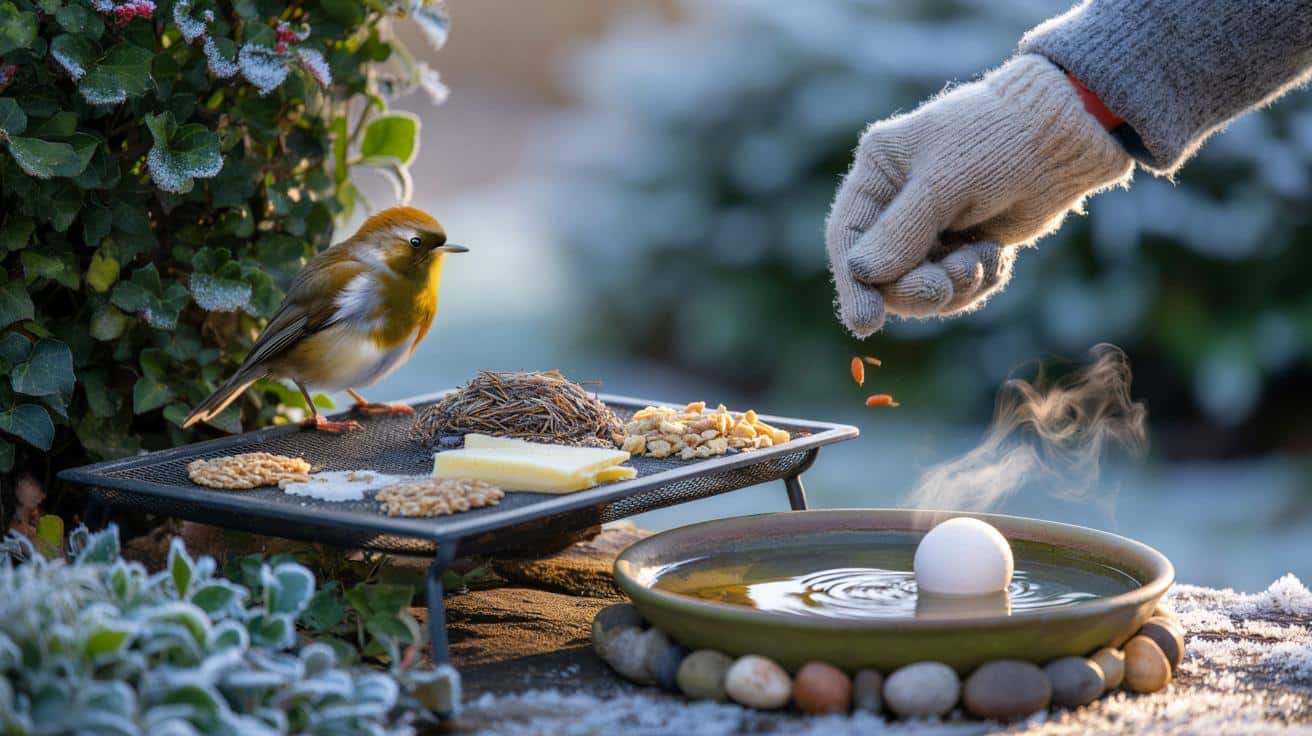
Start with calories. Robins will visit ground trays, low tables, and the top of a plant pot far more than they’ll use a high, swinging feeder. Offer **fat-rich foods**: mealworms (live or soaked dried), suet pellets, sunflower hearts, finely grated mild cheese, and crushed, unsalted peanuts. Scatter a modest pinch in the same spot at first light and again near dusk. That rhythm matters in a cold snap. Keep portions small so nothing sits to spoil.
Water is the other lifeline. Put out a shallow dish with a few pebbles for footing, and refresh through the day when ice forms. Pour in warm—not hot—water to speed a thaw, or float a ping-pong ball to keep a patch moving. No salt, no glycerine, no de-icer. **Fresh water daily** beats a fancy birdbath in winter. Let’s be honest: nobody really does that every day. Even so, a midday top-up when you make tea can carry a robin through the afternoon.
Cleanliness and shelter go together. Give them food, then give them a place to vanish. Tuck an open-fronted robin box in dense ivy or a hedge about 1–2 metres high, facing east or north-east out of the weather. A loose brush pile becomes a windbreak and larder. **Keep feeders clean** weekly with hot, soapy water and a rinse, and bin anything mouldy the moment you see it.
“On freezing weeks, consistency beats quantity,” a long-time garden recorder told me. “Little and often, plus somewhere thick to roost, turns a garden from scenic to life-saving.”
- Place feeding spots roughly two metres from dense cover to reduce ambushes from cats and sparrowhawks.
- Use a ground tray or low platform with mesh sides; avoid loose netting that can snag toes.
- Soak dried mealworms for ten minutes during hard frost to ease hydration.
- Skip bread, salty nuts, and fatballs in nets; go for suet pellets and sunflower hearts.
- Position a dish under a shrub so birds can drink, then dart back into shelter.
The little details that save warmth
Territory matters to robins, even in bad weather. If two turn up, they may bicker rather than share, so spread your help: a second ground tray a few metres away can lower the temperature of a feud. Keep feeding stations low and steady; robins don’t love swinging perches. Put prickly offcuts (holly, berberis) around the base to deter crouching cats. A few scattered leaves on the soil can also flush out tiny invertebrates when the sun nudges the surface above freezing.
Think of shelter as microclimate engineering with what you have. Let a corner go shaggy with ivy, honeysuckle, or a tight hawthorn. A simple windbreak—two pallets wired at right angles and stuffed with dry twigs—can make a calm pocket a robin will use at dusk. Fit an open-front robin box now and line it with a handful of dry leaves; face it away from prevailing rain. If glass confuses visitors, break reflections with decals or a square of net curtain. Tiny margins count.
Hygiene is practical, not fussy. Birds crowding into one spot can spread illness like trichomonosis, especially where food turns mushy. Rinse trays every few days, rotate where you scatter, and let the ground rest if it gets slimy. Winter sun can fool you—seed that looks fine at noon can be sour by dusk if it sat in yesterday’s sleet. Handle it kindly, then throw it away without guilt. The next handful will matter more.
A season made by neighbours
Winter is a chain of small decisions. A saucer of water at lunchtime. A spoon of suet when the sky goes blue and brittle. A box tucked under ivy that becomes a quiet room when the wind swings round. None of it is grand, and that’s the beauty. Robins don’t need a makeover, just the reliable kindness of nearby hands. Share the pattern with your street WhatsApp or a friend two doors down. One garden feeds, the next provides cover, the next offers the drinking spot that doesn’t freeze. The cold is large. So are we, together.
| Key point | Detail | Interest for the reader |
|---|---|---|
| High-energy food | Mealworms, suet pellets, sunflower hearts, grated cheese, crushed unsalted peanuts | Quick, cheap swaps that boost survival without overhauling your routine |
| Water in freezing weather | Shallow dish with pebbles, warm-water top-ups, no salt or de-icer, midday refresh | Turns a frozen garden into a usable pit stop within minutes |
| Shelter and hygiene | Open-front robin box in ivy, brush pile windbreak, weekly clean of trays and feeders | Simple structures and habits that prevent illness and reduce heat loss |
FAQ :
- What should I feed robins during a cold snap?Offer mealworms (live or soaked dried), suet pellets, sunflower hearts, grated mild cheese, and crushed, unsalted peanuts. Small portions at dawn and near dusk work best.
- Is bread okay for robins in winter?Not ideal. It’s low in nutrients and can swell when wet. Choose energy-dense foods instead and remove anything that’s gone mushy.
- How do I keep water available when everything freezes?Use a shallow dish with pebbles, refresh with warm (not hot) water, and top up at midday. Don’t add salt, glycerine, or de-icer.
- Where should I place a robin nest box in winter?Use an open-front box 1–2 m high in dense cover, facing east or north-east. Pack a little dry leaf litter inside to take the edge off the cold.
- Will feeding make robins dependent on me?No. Robins still forage widely. Your reliable extras reduce risk during harsh spells without replacing natural behaviour.






This is the most practical winter guide I’ve read—small, doable stuff. The warm (not hot) water tip with pebbles is genius, and the “little and often” feeding really fits my morning/evening rutine. I’ll swap to suet pellets and soaked mealworms. Thanks for making it feel managable, not guilt-inducing.
Quick question: is grated mild cheese truly okay for robins? I’ve always been told dairy is a no-go for birds. Would love a citation or two—don’t want to definitly harm the wee featherballs by trying a “hack”.