
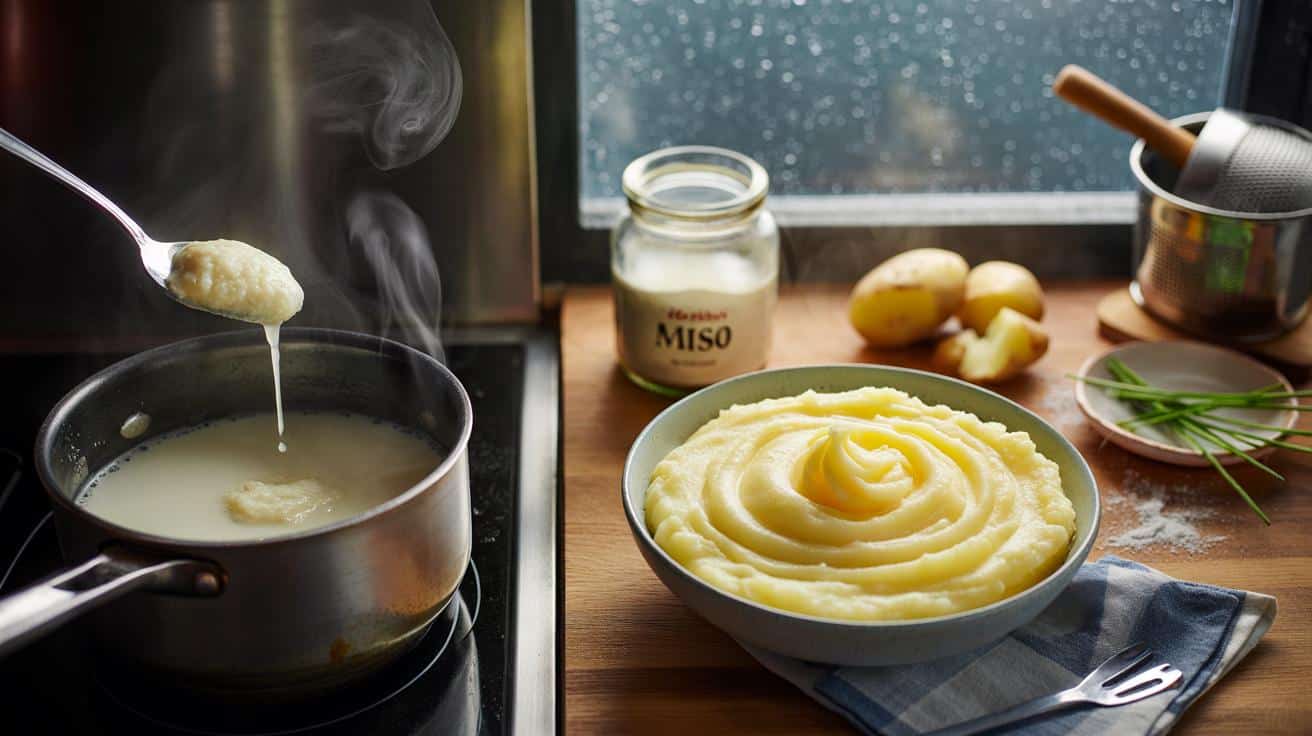
We chase buttery silk with more cream, more beating, more prayers to the starch gods. There’s a simpler move: one small spoon added to the pan changes everything.
The kitchen window fogged as the rain pushed sideways across a London street. Potatoes ticked in a pot, butter waiting in a small pan, radio mumbling about traffic on the North Circular. I was cooking for friends who notice everything and say nothing, the kind of dinner where the mash has to be right.
Steam lifted and the room smelled of wet coats and thyme. A chef mate leaned over the hob, sniffed the pan, and slid a jar into my hand as if it were contraband. I whisked a spoon into the warm butter and milk, then folded it through the riced potatoes. Heads lifted. Conversation stopped. The air changed.
The secret was miso.
The quiet twist that makes mash taste like itself, only louder
White miso is the nudge that turns whispering mash into something that speaks up. A teaspoon or two melts into warm dairy and gives gentle savoury depth without shouting. Add it to the pan with your dairy, not the boiling water, and it disappears into the background like a good soundtrack.
What happens on the plate is subtle and immediate. Salt tastes rounder. Butter tastes richer. And you get that restaurant gloss that usually needs a litre of cream you don’t really want to admit using.
I tested the trick on a Tuesday with neighbours who know their way around a roast. Two bowls, both still steaming: one classic, one with a whisper of **white miso paste**. No one knew which was which. Eight forks went back to the miso bowl until it was wiped clean with a heel of bread.
It wasn’t a lab. It was a hallway dinner with half-charged phones and a wobbly table. The verdict was a shrug and a grin: “That one just tastes more like potatoes.” Which is the point, isn’t it.
Why it works feels like kitchen physics you can taste. Miso is full of natural glutamates from fermented soybeans and rice, so your brain reads “roasted, rich, savoury” before you’ve swallowed. Soy proteins help emulsify fat into the water in your mash, giving a smoother mouthfeel. A little saline lift helps knit the seasoning together without going salty.
Think of it as turning up the gain rather than changing the song. The potatoes stay front and centre. The flavour just steps into the light.
How to add miso to your mash without changing your life (or shopping list)
Start with floury spuds like Maris Piper or King Edward. Cut in large chunks, simmer in well-salted water until a knife slides in with no resistance, then drain and let them steam dry in the pot for a minute. In a separate pan, gently warm **butter and milk** (or cream) with 1–2 teaspoons of white miso per kilo of potatoes, whisking until dissolved.
Push the potatoes through a ricer or mash lightly, pour in the miso dairy, and fold with a spatula until it looks glossy. Stop just before it’s perfect and let it settle for a minute. Finish with a small knob of butter and a pinch of white pepper for lift.
Most “bad mash” comes from the same trio of mistakes. You beat it like cake batter and release starch, you pour in cold dairy, or you chase missing flavour with plain salt. Keep the stir slow and the dairy hot. Go easy on the miso: start small; you can always add more.
Warm your serving bowl, because heat is texture in disguise. If you’re making it ahead, loosen on a low heat with a splash more milk before serving. Let’s be honest: no one really does that every day.
Chefs have been doing this for years with no fuss. They love it because it behaves. And because it makes their potatoes taste like a Sunday roast without the wait.
“White miso is my quiet cheat,” London chef Ellie Hart told me on the pass. “It’s not ‘miso mash’ as a flavour. It’s just deeper, silkier, more potato. Guests can’t call it, but they clear the plate.”
- Ratio: 1–2 tsp white miso per 1 kg potatoes, to taste.
- Heat: dissolve miso into hot dairy, never boil it.
- Texture: use a ricer for cloud-like mash; a masher for rustic.
- Dairy: whole milk works; a splash of double cream gives luxury.
- Finish: a final cube of butter for shine and that **silky, spoon-coating mash**.
Where this takes you next
Miso doesn’t make mash “trendy”. It makes it generous. You can keep the Sunday classics, from sausages and onion gravy to a slow braise, and the potatoes will hold their own without shouting. There’s also room to play: a hint of roasted garlic, a flick of lemon zest, chives at the end.
We’ve all had that moment when the mash hits the plate and you know it’s not right. This trick gives you a safety net that tastes like care, not cover. It tastes like you cooked all day, with almost no extra effort.
If you’re cooking for a mixed table, white miso is discreet. It’s dairy-friendly, meat-friendly, and oddly crowd-pleasing with fish pie. Try it once, then share the spoon around. Watch the faces. Listen to the room.
| Key point | Detail | Interest for the reader |
|---|---|---|
| Add white miso to warm dairy | Whisk 1–2 tsp into hot milk/cream and butter before folding into potatoes | Instant savoury depth and smoother texture without changing the core flavour |
| Work the starch gently | Rice or lightly mash; fold, don’t beat; keep everything warm | Prevents gluey mash and keeps it cloud-light |
| Choose the right potato | Floury varieties like Maris Piper or King Edward; steam dry after draining | Fluffier result and better absorption of flavour |
FAQ :
- Which miso should I use?Go for white (shiro) miso. It’s milder and slightly sweet, so it lifts potatoes without taking over.
- How much miso is too much?Start with 1 teaspoon per kilo of potatoes, taste, then add up to 2 teaspoons. If you can clearly taste “miso”, you’ve gone a shade far.
- Can I make it vegan?Yes. Use a good vegan butter and warm oat or soy milk. The miso still adds body and umami.
- Will it be salty?Miso is salty, so season the cooking water lightly and taste at the end. You’ll likely need less salt than usual.
- Can I use red or brown miso?You can, but it’s punchier and may dominate. Keep it to a half-teaspoon and balance with extra dairy.








Just made a small batch with 1 tsp white miso and it’s a total upgrade—richer but somehow more potato-y. The “dairy first” step defintely prevents that gluey mash I used to get. Brilliant tip!